
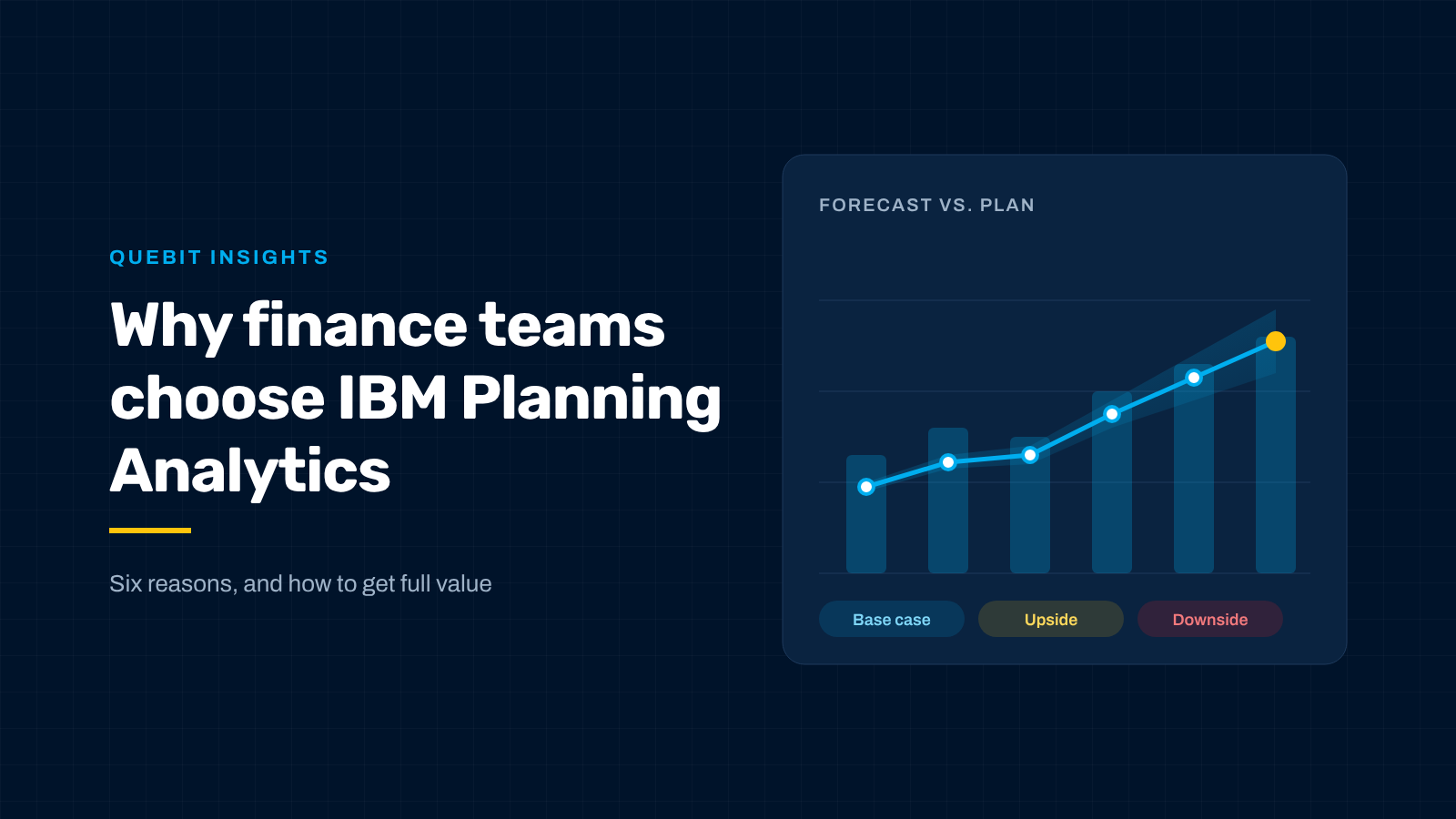
Finance and operations leaders are being asked to plan faster, test more scenarios, and explain every variance, often with tools that were never built for it. A budget that lives across dozens of linked spreadsheets can't keep up with a business that changes weekly.
That's why so many organizations, from mid-market companies to global enterprises, run their planning on IBM Planning Analytics. Built on the TM1 engine that planning teams have trusted for decades, it gives finance, operations, and HR one connected place to budget, forecast, and model what comes next.
Here are the six reasons we hear most often from the teams we work with, and what it takes to get full value from the platform.
1. Speed at enterprise scale
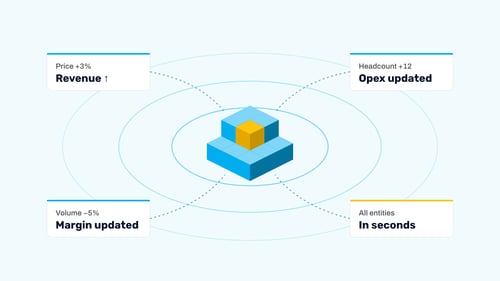
At the heart of IBM Planning Analytics is TM1, an in-memory, multidimensional engine. Change a driver, an assumption, or a single cell, and the impact rolls through every related plan in seconds rather than overnight.
That speed holds up as models grow. Teams can plan across thousands of products, cost centers, and entities, and still get answers while the meeting is happening. Nobody waits on a batch job to see what a change in pricing or headcount means for the P&L.
2. The comfort of Excel, without the spreadsheet chaos
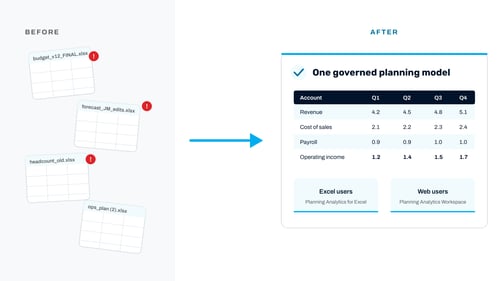
Finance teams love Excel, and Planning Analytics doesn't ask them to give it up. With Planning Analytics for Excel, analysts work in a familiar grid while the numbers live in one governed model, not in emailed files.
The result is a single source of truth. No more version-control headaches, broken links, or late-night hunts for "budget_v12_FINAL." For users who prefer the web, Planning Analytics Workspace offers dashboards, guided plans, and self-service reporting on the same data.
3. Flexible modeling and unlimited scenarios
Every business plans differently, and Planning Analytics bends to fit. Teams can build driver-based models that reflect how the business really runs, from volume and price to labor rates and capacity.
Scenario planning is where that flexibility pays off. Leaders can compare a base case, a downside, and an upside side by side, then test "what if" questions on the fly. When conditions shift, the plan shifts with them instead of starting over.
4. Connected planning
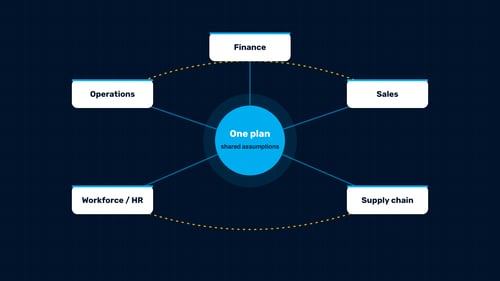
The strongest plans aren't built by finance alone. Planning Analytics connects financial plans with sales, supply chain, workforce, and operational plans in one environment.
When the operations team updates a demand forecast, finance sees the revenue and margin impact right away. When HR adjusts a hiring plan, the cost flows straight into the budget. Everyone works from the same assumptions, so the conversation moves from "whose number is right?" to "what should we do next?"
5. AI built into the planning workflow
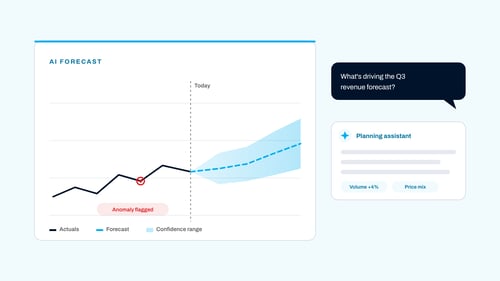
IBM has been steadily adding AI directly inside Planning Analytics, so teams don't need a separate tool to use it. According to IBM, capabilities now include:
- AI forecasting: baseline statistical forecasts, on-demand forecasts, and scenario updates, with explainable summaries and anomaly detection
- A Planning Analytics AI assistant: ask questions in plain language and get answers grounded in your model's logic, drivers, and assumptions
- Agentic workflows: multi-step planning tasks built with IBM watsonx Orchestrate, including human-in-the-loop approvals
- Guardrails: AI stays within your existing permissions and security policies
For finance, that means less time pulling numbers together and more time explaining what they mean.
6. Deployment choice and enterprise-grade governance
Planning Analytics can run as a cloud service or on premises, so organizations can match it to their IT strategy and security requirements.
Either way, governance is built in. Role-based security controls who sees and changes what, and audit trails show how every number got there. That gives CFOs and auditors confidence in the plan, not just the people building it.
Software is only half the story
The platform is powerful, but the value comes from how it's designed and rolled out. A model built around your business drivers, clean data integrations, and users who trust the numbers make the difference between a tool people tolerate and one they rely on.
That's where QueBIT comes in. Since 2001, QueBIT has completed more than 2,000 projects helping finance and operations teams plan smarter. Our consultants bring deep IBM Planning Analytics experience to every stage:
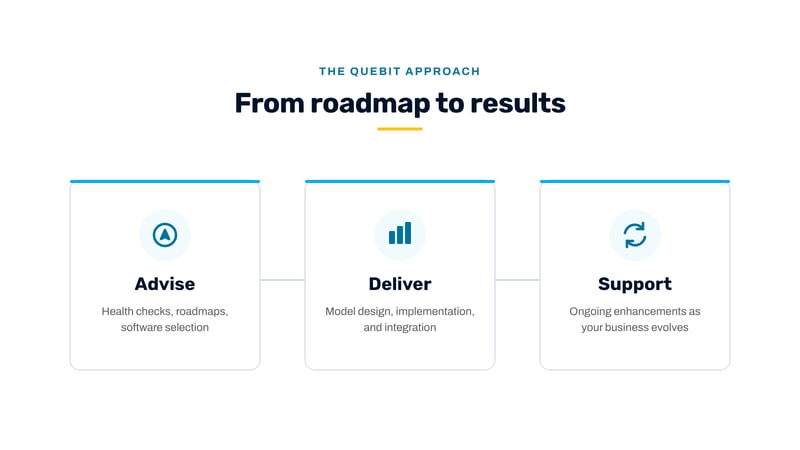
- Advise: health checks, roadmaps, and software selection
- Deliver: model design, implementation, and integration
- Support: ongoing enhancements as your business and the platform evolve
Whether you're new to Planning Analytics or ready to get more from an existing model, we'll help you turn planning into a real advantage.