Blog
We are proud to announce that QueBIT has successfully achieved SOC 2 Type 1 compliance, underscoring our continued commitment to security, reliability, and trust.
Read More
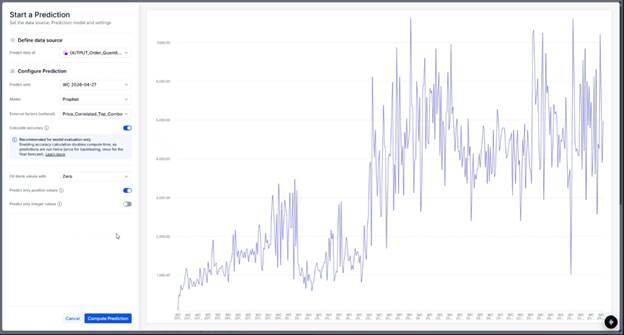
Accurately predicting customer demand has always been a cornerstone of effective business planning. Yet traditional forecasting methods often fall short in today’s fast-changing environment—where shifting customer preferences, supply chain disruptions, and economic volatility are the new norm. That’s where AI-powered demand forecasting comes in. By combining historical data with advanced machine learning algorithms, AI-powered forecasting enables businesses to generate more accurate, dynamic, and actionable forecasts. In this blog, we’ll explore how AI is transforming demand forecasting, the benefits it brings, and what companies need to know to get started.
Topics: #FinanceAI, AI Forecasting
Scenario planning has become essential for supply chain leaders aiming to maintain resilience and agility. Traditional planning methods often struggle to adapt quickly enough to dynamic market shifts, leading to inefficiencies, disruptions, and lost opportunities. Enter Artificial Intelligence (AI) – a game changer that's revolutionizing scenario planning by providing unprecedented accuracy, speed, and flexibility.
Topics: Supply Chain, Scenario Planning
Traditional planning processes often operate in silos—finance, supply chain, sales, and operations each working independently. This fragmented approach leads to inefficiencies, misaligned goals, and a lack of agility when responding to market changes. Integrated Business Planning (IBP) is transforming how organizations plan by aligning these functions into a single, cohesive strategy.
The Consumer-Packaged Goods (CPG) industry is one of constant flux. Shifting consumer preferences, seasonal trends, and external disruptions make demand planning a complex and ever-changing challenge. For businesses in this sector, staying ahead of demand volatility is not just a goal but a necessity for maintaining efficiency and profitability.
Topics: Demand Volatility, CPG
Posted by Justin Croft
The technology industry is a hub of innovation and rapid growth, but it’s not without its challenges. From managing subscription-based revenue to adapting to dynamic cost structures, companies in SaaS, social media, and online dating platforms face significant hurdles. At QueBIT, we’ve developed tailored planning solutions to help technology companies address these challenges and thrive in an ever-changing landscape.
Topics: AI Forecasting, Expense Modeling, Subscription-Based Revenue Management
Posted by Justin Croft
The insurance industry faces a multitude of challenges: shifting regulations, economic volatility, changing customer needs, and the constant threat of disruptive events. In such an unpredictable landscape, insurers must be prepared to adapt quickly and make data-driven decisions that protect profitability while ensuring customer satisfaction. Scenario planning, especially when powered by AI, provides insurers with the tools to navigate these uncertainties proactively.
Topics: Scenario Planning
Posted by Gary Quirke
With evolving global trade policies, it’s wise to plan now for the possibility of increased tariffs in 2025 and beyond. For businesses, the impact from tariffs could be profound, influencing costs, prices, cash flow, and competitive positioning. Companies that leverage scenario planning to anticipate these changes will be better equipped to navigate uncertainty and maintain profitability.
Topics: #FinanceAI, Scenario Planning
Posted by Justin Croft
Staying competitive requires more than just keeping up with industry trends; it demands agility and responsiveness from Financial Planning & Analysis (FP&A) teams. This is where cycle times—the length of time it takes to complete a single financial planning cycle—come into play. Faster cycle times are not just beneficial; they are essential for agile planning and decision-making. Here, we’ll dive into why reducing cycle times is critical for modern FP&A teams and how QueBIT helps businesses enhance operational efficiency and responsiveness through planning automation and business efficiency.
Posted by Justin Croft
Nonprofit organizations operate in an environment full of uncertainties. From unpredictable funding streams and changing donor priorities to external factors like economic downturns and evolving community needs, nonprofits are often forced to navigate a landscape in constant flux. In such an environment, traditional planning methods may fall short. This is where scenario planning comes in.
Topics: AI-Driven Forecasting, Nonprofits, Strategic Planning
© QueBIT | All Rights Reserved. Legal